As India’s industrial landscape grows more collaborative, multi tenant industrial parks are becoming centers of innovation and efficiency. These parks bring together manufacturing units, warehouses, and service providers under one grid all with significant energy needs. Traditionally, each tenant has relied on its own power connection, creating redundant costs and infrastructure. But with the rise of shared renewable energy models, a new opportunity is emerging: collaborative clean power generation. Through well planned Industrial solar solutions, industrial parks can now share solar energy legally, efficiently, and profitably, transforming how businesses consume and manage electricity.
The concept of shared solar generation is gaining rapid acceptance because it aligns environmental goals with financial prudence. Instead of every tenant setting up separate systems, a single large solar project can cater to multiple consumers within the same park. This is where partnering with a trusted solar energy solutions company becomes crucial. The company can design a system that meets regulatory requirements, optimizes distribution, and ensures fair cost allocation among all tenants. This collaborative approach not only reduces capital expenditure but also delivers greater overall energy output through economies of scale.
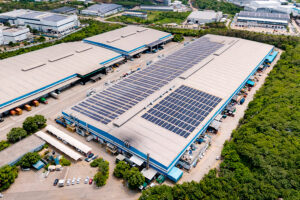
Rooftop solar installations have played a major role in making shared power models practical. Large industrial park rooftops, which would otherwise go unused, can now be turned into productive energy generating assets. When combined with open access or group captive arrangements, rooftop systems allow multiple tenants to benefit from low cost solar power without the administrative burden of managing separate plants. A leading solar energy solutions company such as Tech Solar ensures that these projects are designed for compliance, financial transparency, and long term reliability all while maximizing power generation across available surfaces.
However, for shared solar projects to be successful, legal and regulatory structures must be clearly defined. This is where Solar consultancy services make the biggest difference. Consultants help industrial park owners and tenants navigate complex state electricity regulations, open access permissions, and metering frameworks. They assess consumption profiles, determine equitable cost sharing models, and structure power purchase agreements (PPAs) that safeguard every participant’s interests. By providing expert guidance, consultancy professionals ensure that each tenant’s share of energy, cost, and benefit is accurately tracked and accounted for.
The financial benefits of Industrial solar solutions for shared industrial parks are significant. A collective system minimizes installation costs, reduces tariff dependency on distribution companies (DISCOMs), and offers long term power price stability. In fact, shared solar systems often achieve payback periods shorter than individually owned installations due to optimized generation capacity and shared maintenance costs. Over time, such projects also increase the park’s valuation, making it more attractive to tenants seeking sustainability driven premises. When executed as a professionally engineered rooftop solar installation, the system not only lowers costs but also enhances the property’s green credentials a key differentiator in today’s ESG driven business environment.
A case study from western India highlights the impact of this model. A large logistics and manufacturing park partnered with Tech Solar to set up a 6 MW solar plant spanning multiple building rooftops. The system was designed and managed as a single integrated power source with digital metering that allocated generation data and costs to each tenant automatically. With ongoing support from Tech Solar’s Solar consultancy services, the park maintained compliance with state electricity rules while achieving energy cost savings of nearly 40%. Additionally, tenants gained the ability to report their share of carbon reductions in their sustainability disclosures, further strengthening their corporate ESG performance.
Operationally, shared solar setups require advanced monitoring and governance mechanisms. A skilled solar energy solutions company can implement smart metering systems, online monitoring dashboards, and automated billing software that simplifies operations. This ensures transparency, accountability, and ease of management for both park operators and tenants. Moreover, by integrating storage systems or hybrid connections, such projects can guarantee consistent power even during grid fluctuations, improving reliability for high consumption industries.
The environmental advantages of shared solar systems extend beyond individual savings. By reducing dependency on fossil based power and minimizing transmission losses, industrial parks collectively contribute to India’s national renewable energy targets. Each kilowatt hour generated through shared Industrial solar solutions represents progress toward decarbonization and sustainable industrialization. For tenants, this creates not just an economic incentive but also a powerful statement of environmental commitment that can be showcased to clients, investors, and international partners.
Tech Solar’s role as a solar energy solutions company goes far beyond installation. It involves designing energy ecosystems that bring multiple stakeholders together under one green infrastructure. The company’s end to end expertise from technical design and financial modeling to regulatory facilitation and long term maintenance ensures that industrial parks can successfully implement shared solar systems without operational complexity. Supported by their dedicated Solar consultancy services, clients gain not only the confidence of compliance but also measurable financial and environmental returns.
As India’s push toward renewable energy intensifies, shared solar power models will become the norm for industrial clusters and business parks. With rooftop solar installations engineered for collaboration and efficiency, and guided by specialized consultants, businesses can share energy responsibly while achieving cost leadership. The shift from isolated systems to shared ecosystems marks the next stage of industrial sustainability one where Industrial solar solutions are not just powering factories, but powering communities of enterprises committed to progress, partnership, and a greener future.