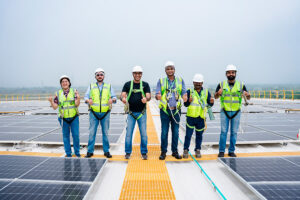
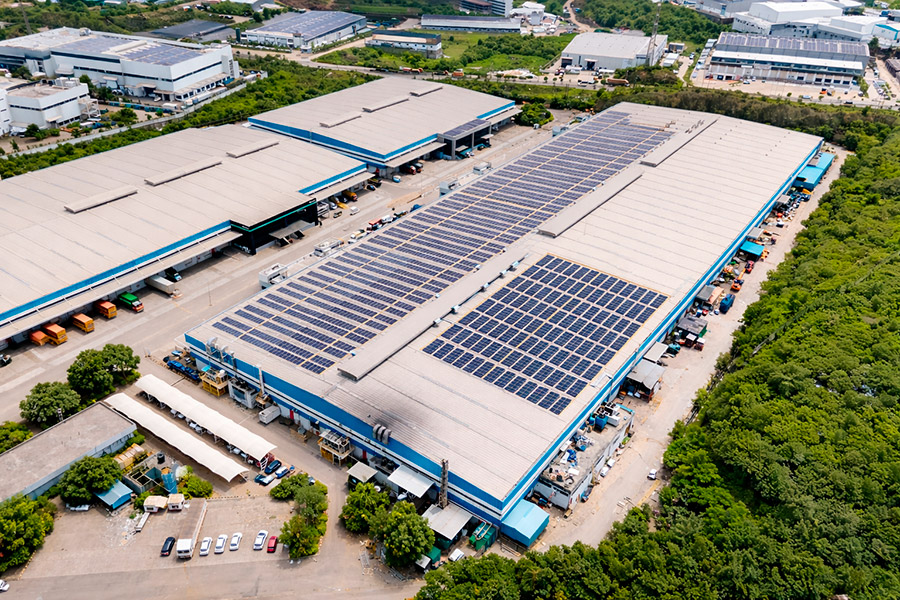
Mumbai has one of the highest commercial electricity tariffs in India. For businesses running offices, retail spaces, hotels, or warehouses in the city, electricity costs eat into margins in ways that are hard to offset elsewhere. Rooftop solar installations are increasingly how commercial property owners in Mumbai are addressing that.
But installing solar on a commercial building in Mumbai isn’t the same as a straightforward residential rooftop setup. There are structural considerations, regulatory steps specific to Maharashtra, and tariff structures that affect how the numbers actually work.
Commercial buildings also come with practical installation constraints. Many rooftops are already occupied with HVAC systems, cooling towers, ducts, water tanks, and service pathways. This limits usable space and makes system design far more complex requiring careful layout planning, elevated structures, and safe access for maintenance.
In such cases, only an experienced and technically sound EPC team can design and execute an efficient system without compromising safety, performance, or existing infrastructure.
The Net Metering Situation in Maharashtra
Net metering allows you to feed excess solar generation back to the grid and receive credit against your electricity bill. Maharashtra’s DISCOM like Adani, Tata, Torrent, BEST Electricity and MSEDCL, depending on your area does permit net metering for commercial consumers, but the process involves submitting a technical feasibility application, getting approval before installation, and commissioning the system through the grid operator.
The critical point: you need DISCOM approval before you install, not after. Installing first and applying later delays your net metering activation and can create compliance complications. Any serious solar panel company in Mumbai will manage this paperwork as part of their delivery scope.
What Does Rooftop Solar Cost for a Commercial Building in Mumbai?
Commercial rooftop solar cost in Mumbai varies based on system size, roof type, and installation complexity. A rough benchmark for on-grid systems ranges from Rs. 45,000 to Rs. 60,000 per kilowatt installed including panels, inverter, mounting structure, wiring, and DISCOM paperwork.
For a mid-size commercial space consuming 200–400 Units daily, a system sized between 50–100 kWp would be typical. At those figures, the investment lands between Rs. 22 to 50 lakh. Payback periods for commercial solar Mumbai typically run 4–5 years, after which the system generates savings for another 20 years.
Those numbers shift based on your tariff category, whether you’re on a Time-of-Day tariff, and how much of your consumption falls during generation hours.
Structural Realities of Mumbai's Commercial Buildings
Rooftop solar installations on older commercial buildings in South Mumbai, BKC, or Andheri require a structural load assessment before design begins. Most commercial terraces can support standard aluminium mounting structures, but buildings with waterproofing layers, access restrictions, or older RCC construction may need engineering sign-off.
Shadow analysis matters here more than most people realise. Urban Mumbai buildings deal with shading from adjacent towers, AC units, and overhead structures. A proper site survey maps these out and designs around them systems that ignore shading will underperform significantly against their quoted projections.
What to Prioritise When Choosing a Solar Panel Installation or Solar EPCCompany in Mumbai
Local experience counts more in Mumbai than in less regulated markets. DISCOM-specific knowledge, familiarity with building types across different zones, and relationships with structural engineers who understand high-rise and commercial terrace constraints these aren’t things a vendor can improvise.
Ask specifically how many commercial rooftop solar installations they’ve completed in Mumbai, which DISCOMs they’ve worked with, and what their average timeline from application to commissioning has been. Timelines of 8–14 weeks are realistic for compliant commercial solar Mumbai projects; anything significantly faster should prompt questions about what steps are being skipped.
Commercial solar in Mumbai makes strong financial sense but it requires doing the groundwork properly. The payoff over a 25-year system life is substantial. The risk is in rushing the pre-installation steps that determine whether that payoff actually materialises.