Your electricity bill is probably one of the top three operational costs in your facility. For most manufacturing units in India, that bill runs into lakhs every month and it only goes up. That’s the reason industrial solar solutions have moved from a ‘nice to have’ to a genuine business decision for factory owners across Maharashtra, Gujarat, Tamil Nadu, and beyond.
But solar isn’t a one-size-fits-all answer. Whether it makes sense for your facility depends on a few specific factors that are worth understanding before you talk to any vendor.
What Makes a Factory a Good Candidate for Solar?
The single biggest indicator is daytime power consumption. Factories that run single or double shifts with most of their load falling between 12 AM and 5 PM are the best candidates for factory solar power systems. The reason is straightforward: solar panels generate power during daylight hours, and if your machines are running at that time, the energy goes directly into your operations rather than sitting in a battery or going back to the grid.
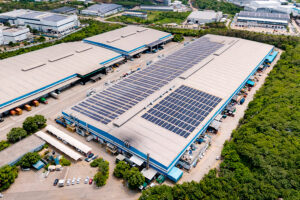
Roof area matters too. A rooftop solar installation for a Commercial Building or factory requires roughly 100 square feet per kilowatt of capacity. A facility consuming 100 kW or units of electricity per day would need approximately 10,000 square feet of usable roof space which most mid-size industrial sheds can accommodate.
Contract demand is the third factor most factory managers overlook. If you’re on a high-tension connection with a significant contract demand charge, solar can cut that bill considerably not just the per-unit consumption cost.
What Does Solar ROI Actually Look Like for Indian Factories?
The solar payback period in India for industrial installations typically falls between 4 and 6 years. After that, the energy your system generates is essentially free. Over a 30 -year system life, that adds up.
Let’s put numbers to it. A 500 kW industrial solar installation in Maharashtra installed at roughly Rs. 35–40 per watt would cost between Rs. 1.75 to 2 crore. At current tariff rates, a facility consuming that capacity during the day could save Rs. 35–50 lakh annually. That’s a payback of less than 4–5 years, with the system continuing to generate savings for another 20 to 30 years and more.
These figures shift based on your sanctioned load, the applicable tariff slab, and local solar irradiance. Which is why a proper energy audit matters before you finalise anything.
The Questions You Should Ask Before Signing Anything
Most vendors will lead with panel brands and per-watt pricing. That’s not where the conversation should start. Here’s what to ask instead:
- Has a site assessment been done? Your roof’s structural load capacity, shading analysis, and orientation all affect output.
- How is the system sized? Based on your actual consumption data, not a generic estimate.
- What’s the commissioning timeline? And who manages DISCOM approvals and net metering paperwork
- What does post-installation support look like? Annual maintenance contracts and performance monitoring matter more than most buyers realise.
A serious industrial solar solutions provider will answer all of these before the proposal stage. If they can’t, that tells you something.
Solar for Factories in India Government Support Worth Knowing
The Indian government offers accelerated depreciation benefits for commercial and industrial solar installations 40% in the first year under the Income Tax Act. For profitable manufacturing units, this alone can dramatically improve the effective payback on your investment.
State-specific DISCOM policies on net metering also vary. Some states allow industrial consumers to export excess generation back to the grid; others don’t. Understanding what applies to your facility and state is part of what a good pre-investment consultation covers.
Solar for factories in India isn’t a niche proposition anymore. Across sectors textiles, pharmaceuticals, food processing, auto components facility managers who moved three to five years ago are now operating with significantly lower energy costs than competitors who didn’t. The question isn’t really whether solar will eventually make sense. It’s whether you want to start those savings now or later.