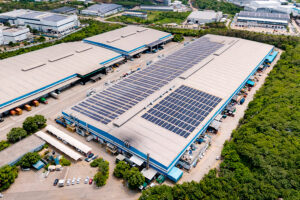
India’s journey toward inclusive development hinges on one powerful enabler access to reliable electricity. While cities continue to thrive under expanding grids, vast parts of rural India still face energy insecurity. Irregular power supply disrupts farming, healthcare, education, and small scale industries, limiting both growth and opportunity. The answer lies in solar energy in remote areas, where decentralized microgrids are lighting up villages and empowering communities. These systems, designed by the best solar company and supported by innovative technologies, are not only providing electricity but also driving self sufficiency and rural entrepreneurship.
Unlike conventional grid extension, which requires massive infrastructure and long timelines, solar microgrids offer an immediate, scalable, and cost effective solution. A microgrid powered by solar for rural areas combines solar panels, battery storage, and smart distribution to supply consistent power to homes, schools, and enterprises. Each unit operates autonomously yet efficiently, making it ideal for remote regions with weak or no grid connectivity. This approach bridges India’s energy divide while supporting national goals like “Smart Village 2030” and “Atmanirbhar Bharat.”
The role of experienced solar pump suppliers in India has been pivotal in this transformation. Many suppliers, including Tech Solar, have expanded beyond traditional irrigation systems to deliver integrated microgrid and agricultural energy solutions. By combining solar powered pumps, cold storage, and mini grid distribution, these solutions provide farmers and rural entrepreneurs with dependable power for multiple applications. This synergy enables irrigation, food preservation, and small scale manufacturing all driven by clean, renewable energy from the sun.
Projects powered by solar energy in remote areas are transforming the socio economic fabric of rural India. Reliable electricity brings more than just convenience; it sparks innovation and growth. For instance, in parts of Maharashtra and Madhya Pradesh, solar microgrids have enabled villagers to establish grain mills, dairy processing units, and rural workshops that were previously unviable due to erratic power. These businesses not only generate employment but also create local value chains that reduce migration to urban areas. The involvement of the best solar company ensures that these systems are designed for durability, scalability, and ease of maintenance guaranteeing long term benefits for the community.
Agriculture, the backbone of India’s rural economy, is reaping the greatest rewards from this renewable revolution. Solar microgrids combined with solar powered irrigation systems are helping farmers gain independence from expensive diesel pumps and unreliable grid electricity. With support from established solar pump suppliers in India, these systems allow 24×7 water access, improving crop yields and reducing operational costs. Farmers can now cultivate multiple crop cycles and use surplus energy from the microgrid to power other farm based operations like threshing, milling, and refrigeration.
The environmental benefits of solar for rural areas are equally profound. By replacing diesel generators with clean solar power, microgrids reduce carbon emissions and local air pollution. This shift supports India’s broader climate goals and strengthens its position as a global advocate for renewable energy leadership. Moreover, solar microgrids are designed to require minimal maintenance an essential factor for remote locations. With the expertise of the best solar company, communities receive not just infrastructure but also training in operation and basic maintenance, empowering them to manage their own energy systems sustainably.
One of Tech Solar’s flagship projects in Maharashtra perfectly illustrates this transformation. The company, recognized among leading solar pump suppliers in India, implemented a 150 kW solar microgrid system that powers an entire farming cluster. The project includes solar irrigation, a refrigerated storage facility, and a small scale rice mill all operated through renewable power. The system provides uninterrupted electricity to 60 households and 25 micro enterprises, saving over ₹25 lakh annually in diesel and grid costs. The village has since become a model for clean rural electrification, demonstrating how solar energy in remote areas can fuel both social progress and economic resilience.
The financial viability of solar microgrids has also improved dramatically due to falling equipment costs and government support. Subsidies under schemes like PM KUSUM and the Rural Electrification Policy have made projects more affordable. Partnerships with the best solar company enable local entrepreneurs, NGOs, and cooperatives to design business models where users pay small, predictable fees for electricity. This ensures that microgrids remain financially sustainable while delivering widespread benefits.
In addition to electrification, solar for rural areas drives digital inclusion and education. Villages with reliable power can now run computer centers, telemedicine units, and digital classrooms connecting communities to essential services and modern opportunities. These positive ripple effects underscore that solar energy is not just a technology, but a tool for empowerment.
Ultimately, the expansion of solar energy in remote areas marks a paradigm shift in India’s approach to rural development. Clean, decentralized energy is powering livelihoods, improving education, and strengthening rural enterprises. The combined efforts of visionary policymakers, innovative solar pump suppliers in India, and trusted EPC experts like Tech Solar are ensuring that the benefits of renewable energy reach the last mile.
The future of India’s villages will not be defined by what they lack, but by what they create. With the support of the best solar company, rural communities are turning sunlight into opportunity generating not just electricity, but empowerment, independence, and a brighter, sustainable tomorrow.